KNIFE MATERIAL
Versatile chef’s knife in stainless steel
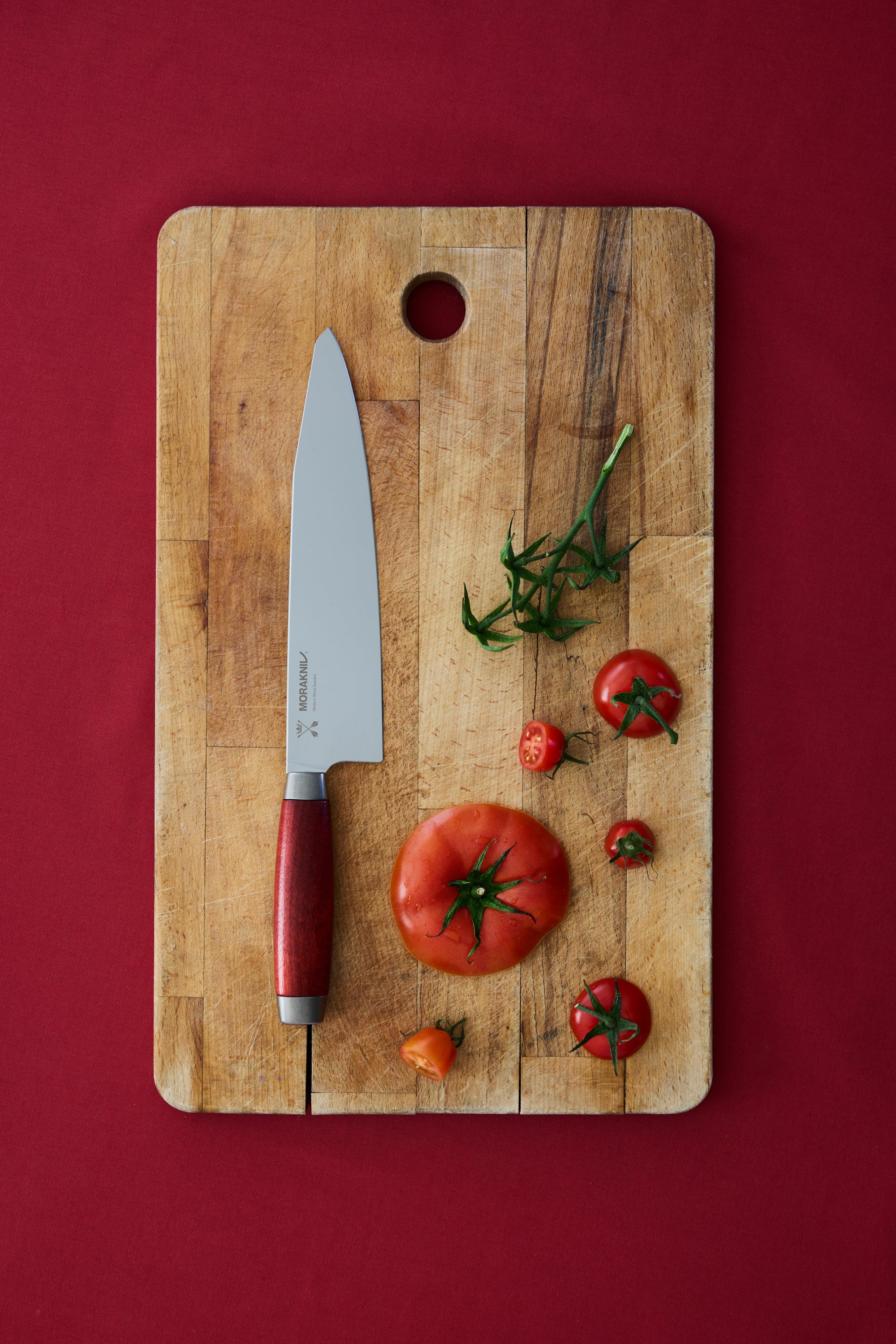
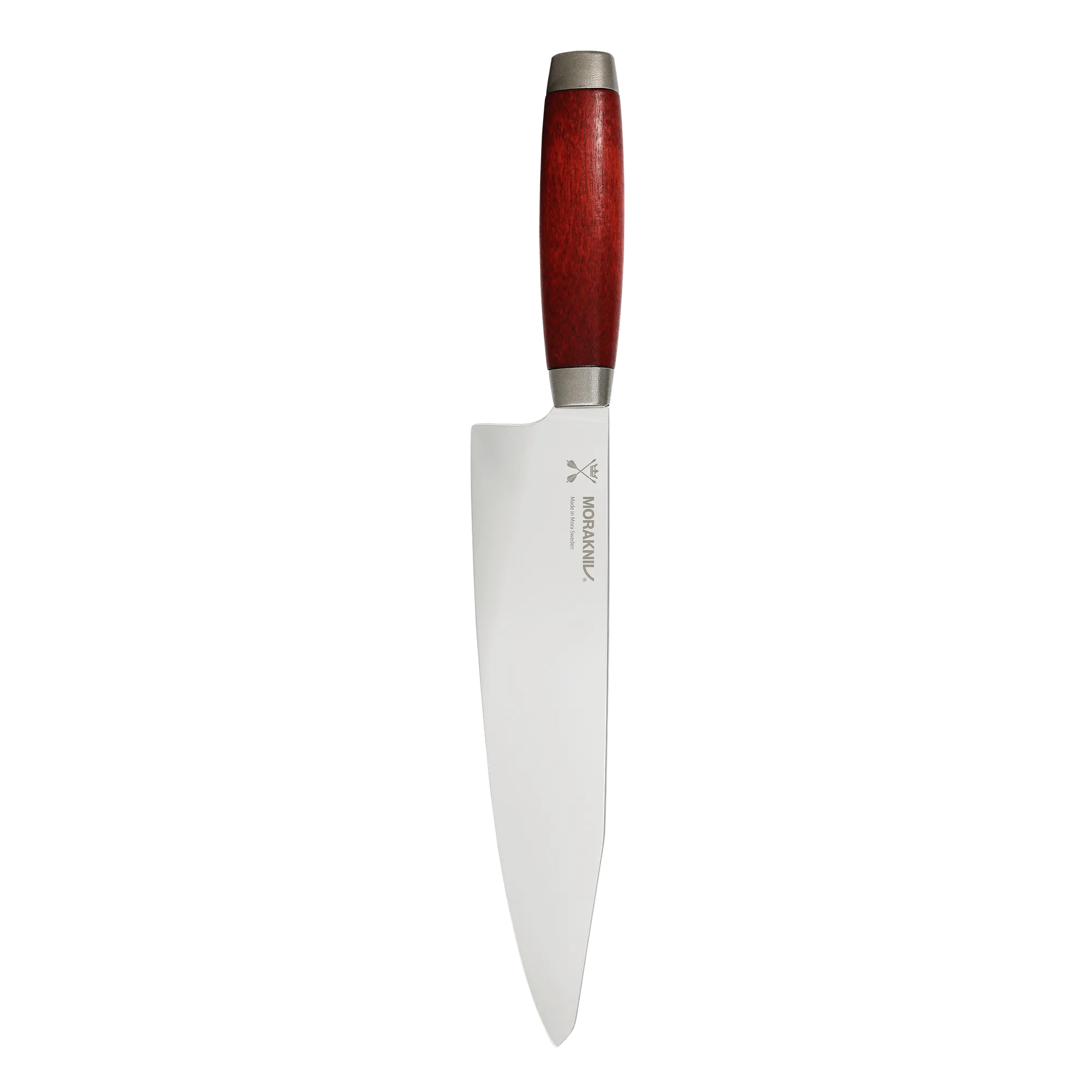
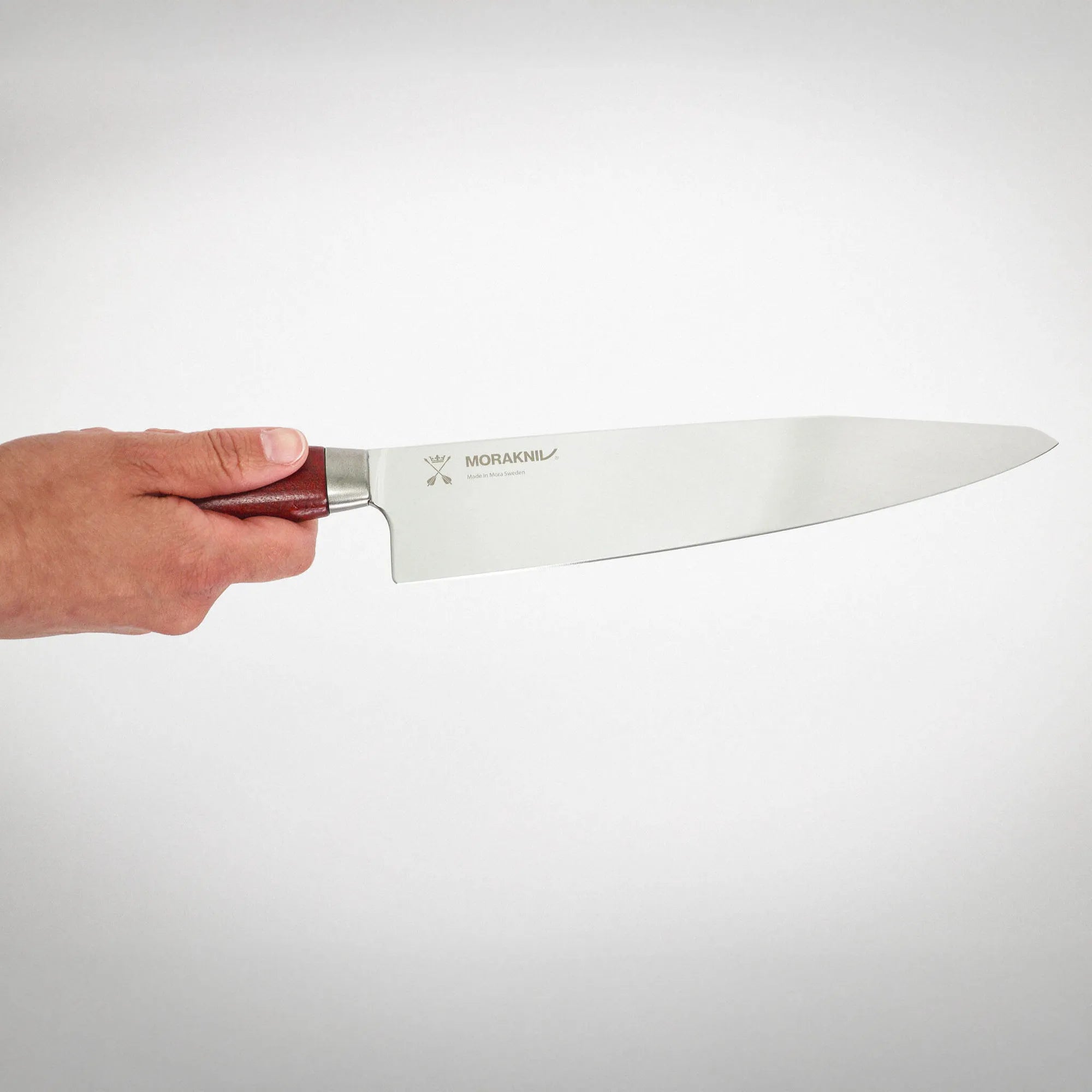
Chef’s Knife Classic 1891 (S) is a versatile and well-balanced knife with a 22 cm blade made of Swedish stainless steel. Perfect for chopping vegetables and slicing meat and fish with precision in every cut.
Chef’s Knife Classic 1891 (S) features a classic design inspired by the first Morakniv, with a red-stained birch handle that sits comfortably in the hand. The 22 cm blade is crafted from stainless steel with lasting sharpness, able to handle most kitchen tasks.
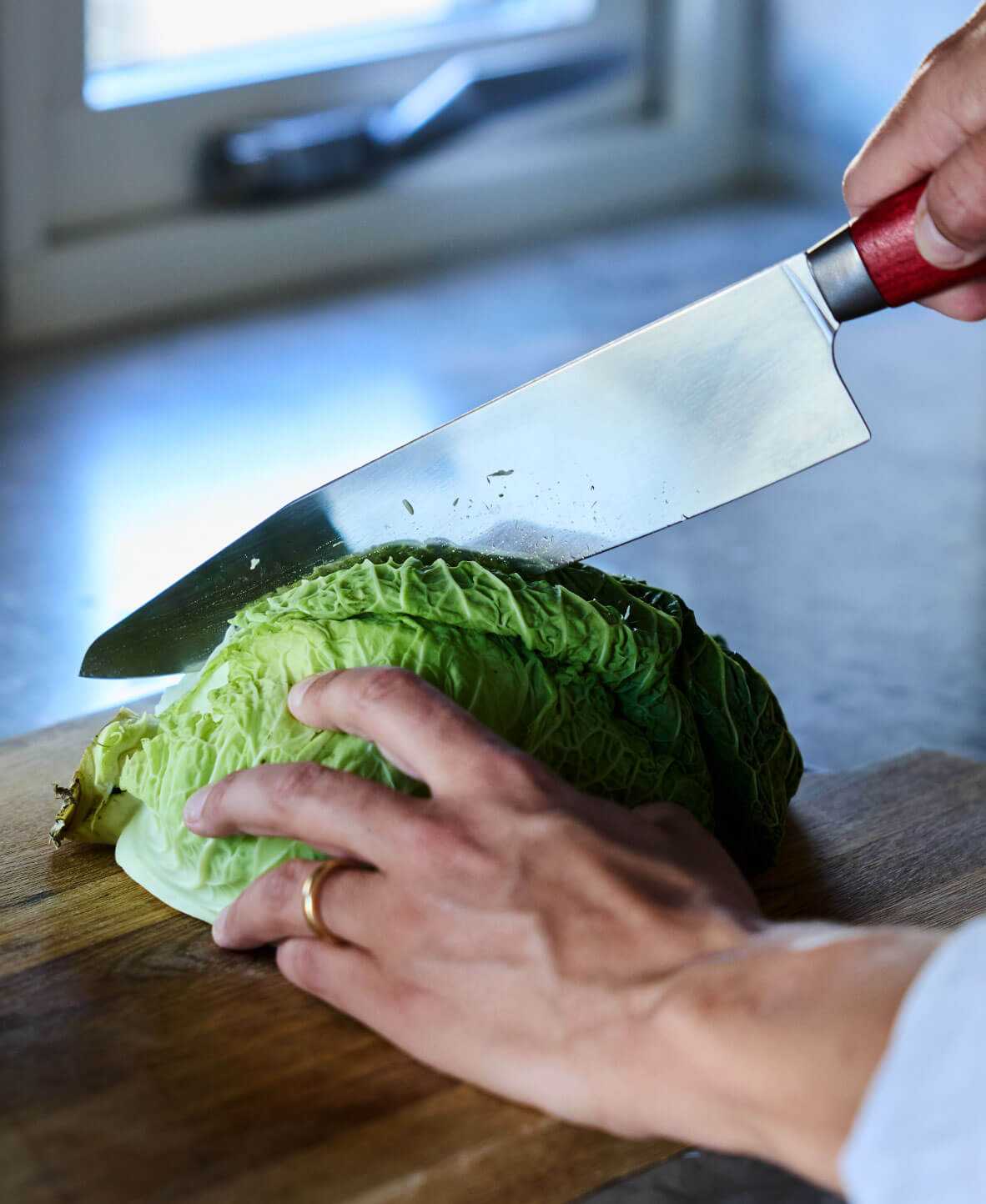
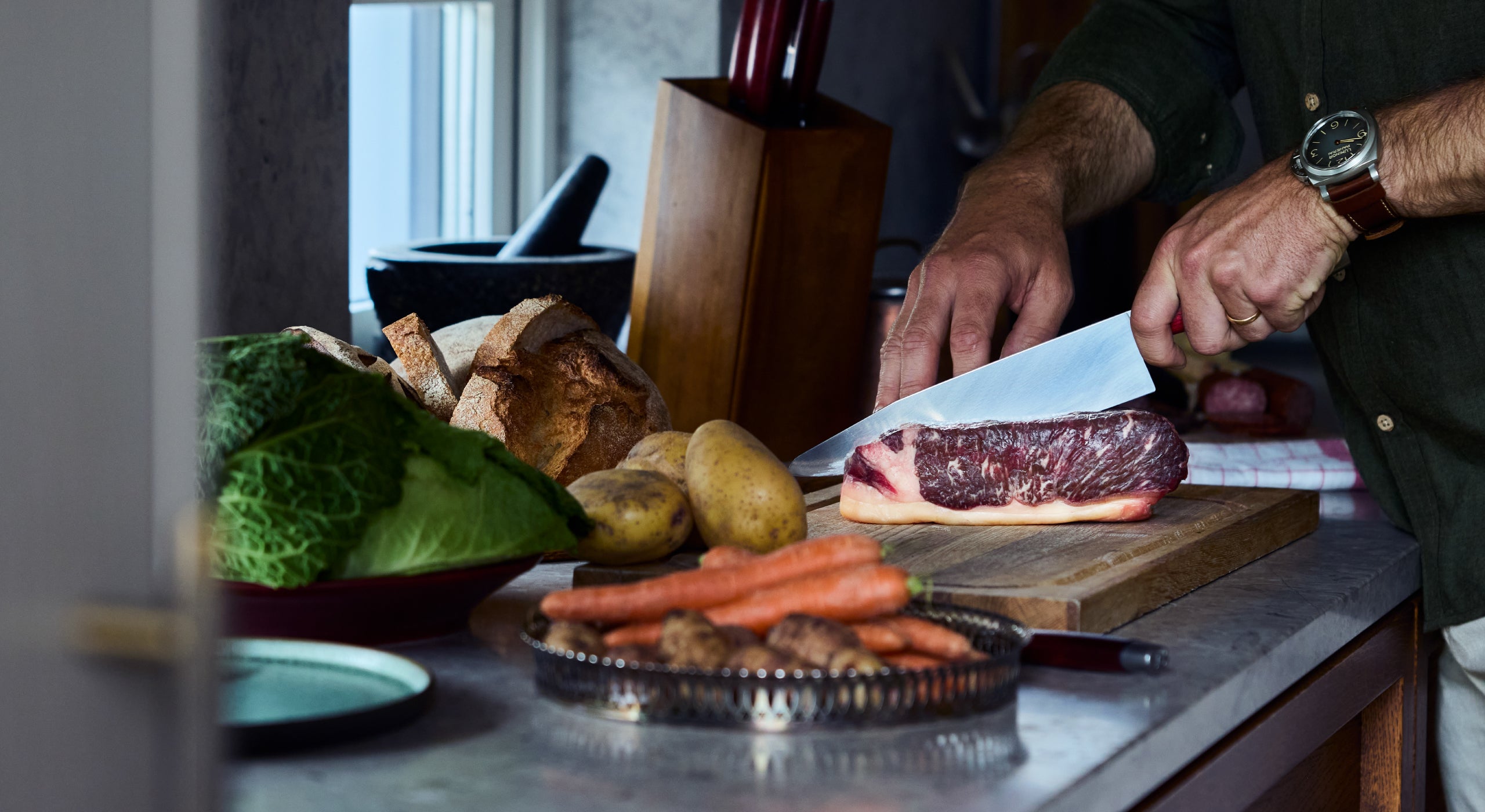
This chef’s knife is your everyday workhorse. It easily crushes garlic, slices root vegetables, finely chops herbs, and precisely cuts meat and fish. A well-balanced and versatile kitchen essential.
The knife is well balanced with a barrel-shaped handle that fits comfortably in the hand and includes a finger guard for safe handling. Stainless steel ferrules protect the wood from moisture and bacteria. The rounded spine and tip make it easy to scrape the cutting board and reduce the risk of puncture injuries.
The 22 cm blade is made from Swedish stainless steel (10C28Mo2) with a recycling rate of over 80% and a hardness of 57 HRC. The blade is 2 mm thick with an 18° sharpening angle per side (36° total), delivering precise, even cuts and making the knife easy to maintain and sharpen.
All components are made in Sweden and the knife is hand-assembled at Morakniv’s factory in Mora – the result of 135 years of knife-making tradition.
Our products are intended for both hobby and professional use within cooking, outdoor activities, hunting, craft, woodcarving, and more. Please read this manual carefully before use. Improper use may lead to injury.
Read more about how to care for your knives
KNIFE MATERIAL
Avoid dishwashers, as dishwasher detergent, heat and prolonged moisture can damage the steel, edge and handle. Sharp knives can also damage the interior of the dishwasher, and there is a risk of cutting yourself when loading or unloading it.
Never leave the knife in water or in a sink, as moisture can cause the wood to swell and crack. For steak knives, this can also cause gaps to form between the handle, bolster and blade as the wood dries, and in some cases lead to corrosion on the tang inside the handle. Clean the handle with a damp cloth and mild soap if needed, and always dry the knife immediately.
The handle is coated with a protective lacquer that seals the surface and prevents oil from penetrating the wood. If you apply oil, it will remain on the surface and may become sticky or rancid over time. If you want to restore the finish, the handle needs to be re-lacquered instead.
The blades in Morakniv’s kitchen and steak knives are made from stainless steel. A more accurate term is corrosion-resistant steel – it resists rust better than carbon steel but can still develop spots or corrosion if left dirty or wet. Therefore, keep the blade clean and dry after use.
Store the knife securely and separately from other knives to protect the edge. For kitchen knives, a magnetic knife strip, knife block or knife stand all work well, as long as the knife is handled with care. If you use a magnetic knife strip, lift the knife straight off – pulling it away can bend the edge. Knife blocks are difficult to clean inside, which can allow moisture and bacteria to build up. Make sure the knife is always clean and completely dry before placing it in the block, and store it with the edge facing upwards to prevent it from wearing against the wood when inserting or removing it. For steak knives, the original packaging is often the best storage option. Avoid storing loose knives in kitchen drawers, where both the edge and handle can easily be damaged.
When moving chopped ingredients from the cutting board, turn the knife over and use the spine. Scraping with the edge can bend the very thin outer part of the edge and cause the edge to dull more quickly.
Use a honing steel to realign the edge between sharpenings. Hold a steady angle and run the knife lightly along the steel – this helps restore sharpness when the edge has become slightly misaligned. Both steel and ceramic honing rods work well. With a little practice, it’s easy to do yourself. Sharpen the knife when needed.
For more advanced sharpening, you can use a knife sharpener such as the Tormek T-1 Morakniv 1891, which maintains a consistent angle for precise results. Learn more in our guide How to sharpen your Morakniv and watch our Tormek sharpening videos on YouTube.