
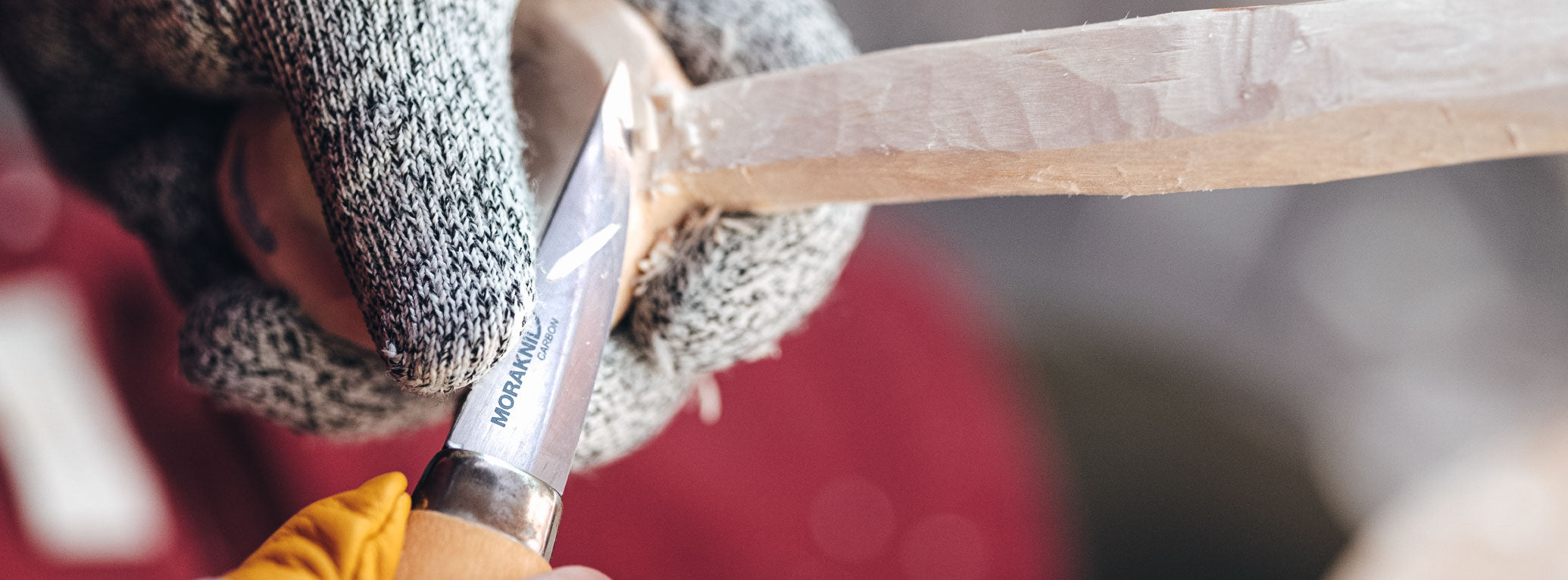

Why whittle?
Whittling isn’t just a creative craft—it’s almost meditative. It offers a calming pause where your hands get to work in silence. For anyone used to spending hours in front of a screen, there’s something deeply satisfying about working with your hands and watching a shape emerge, one knife stroke at a time.You can carve practical objects like spoons, bowls, or knobs or let your imagination run free and create figures or decorative patterns.
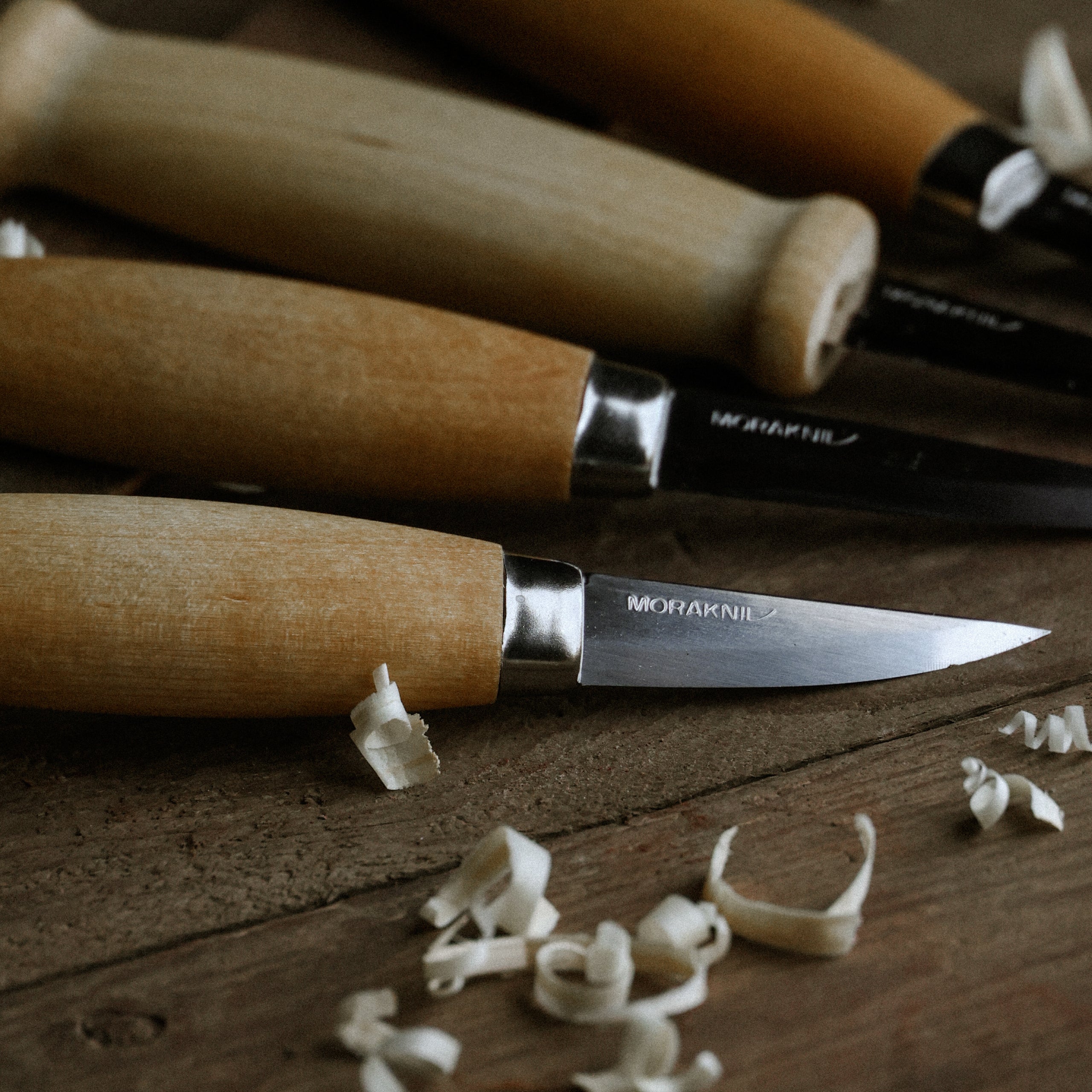
Tools and materials for getting started with whittling
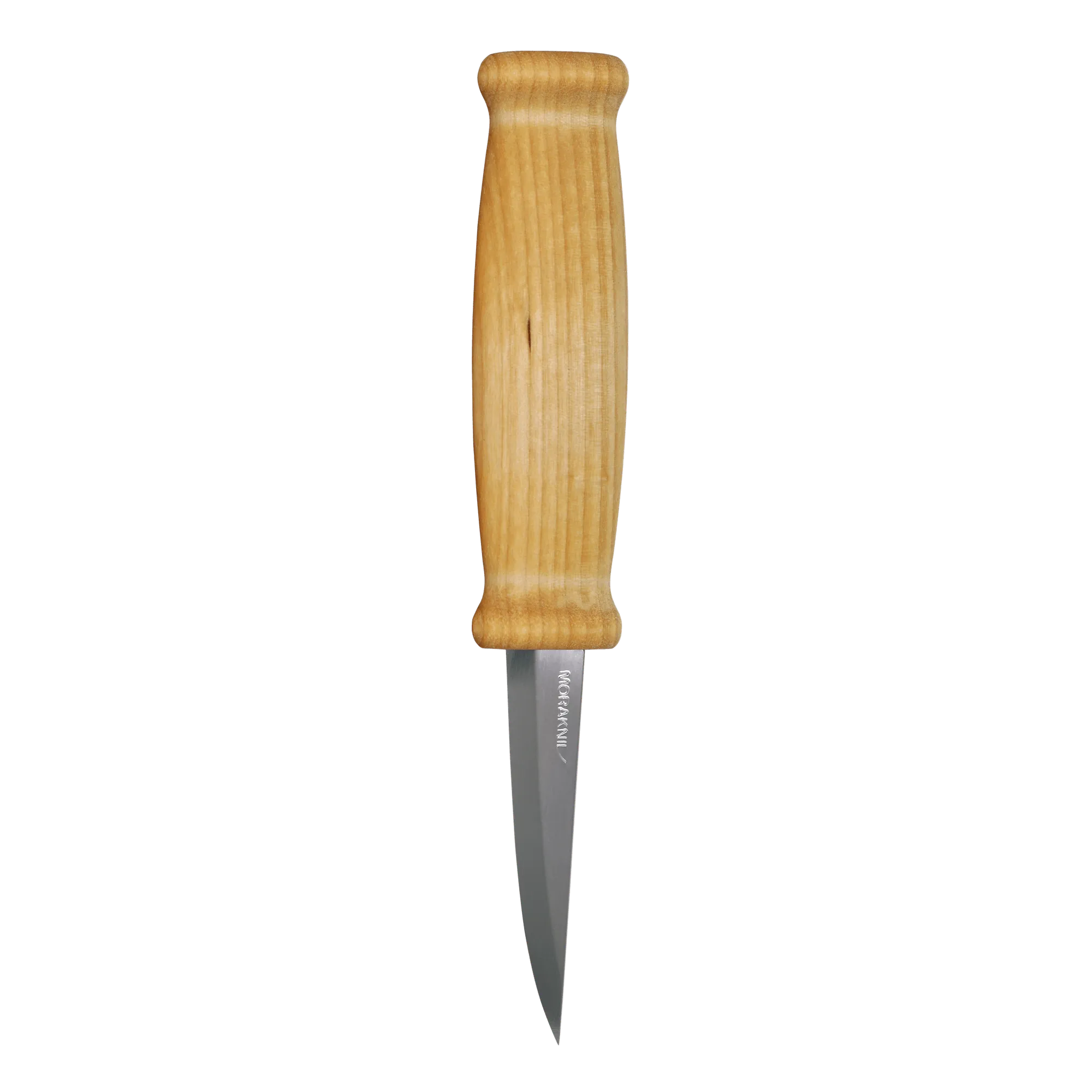
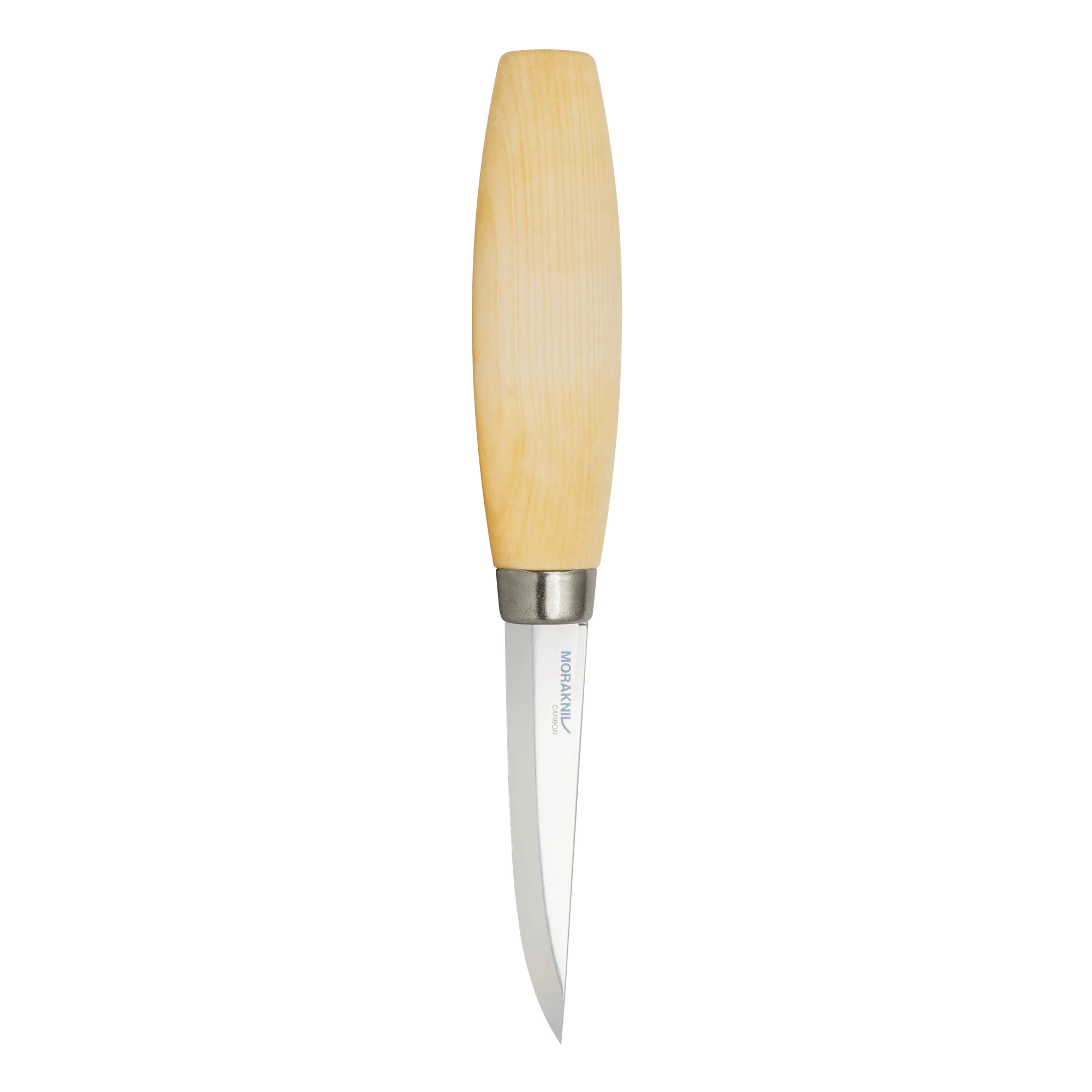
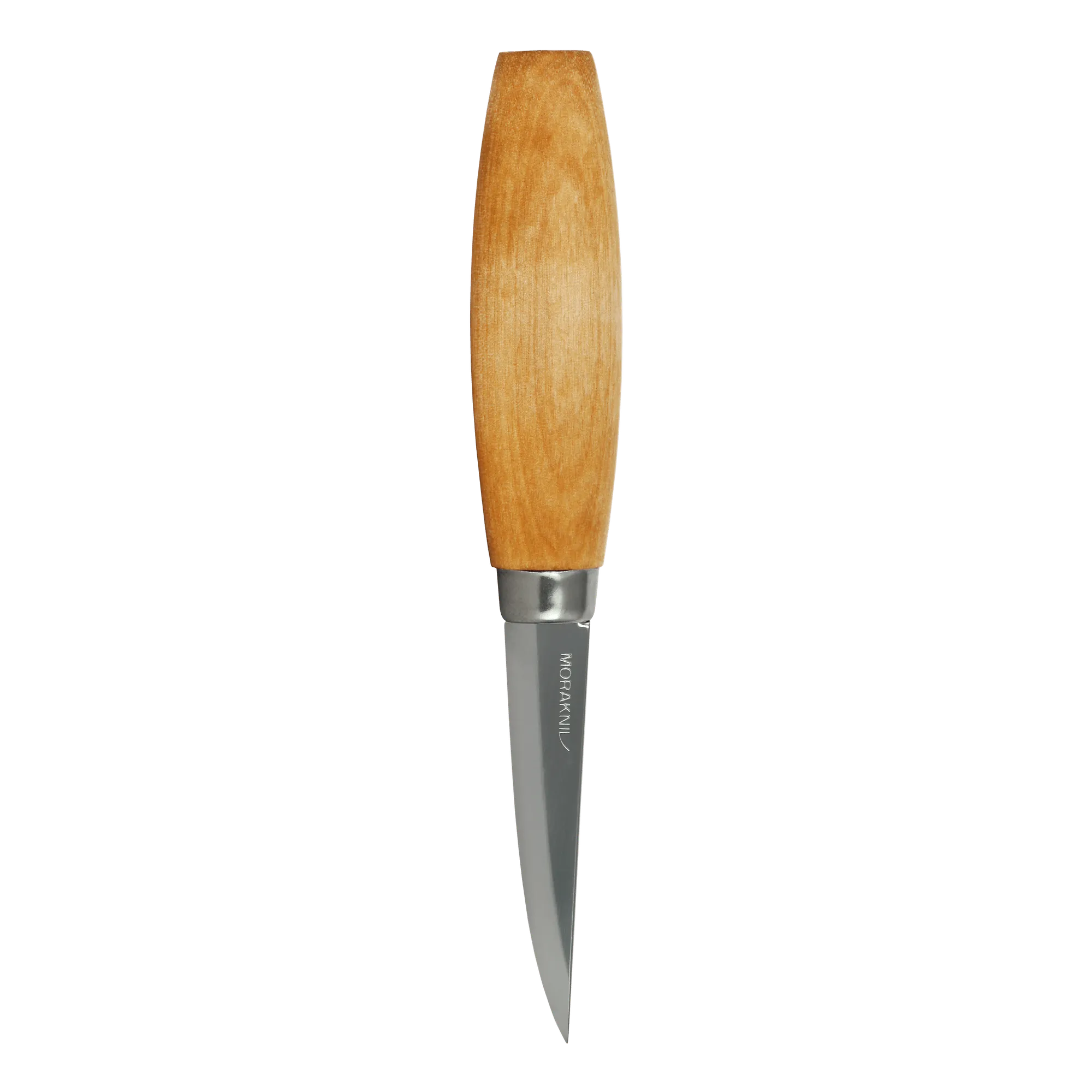
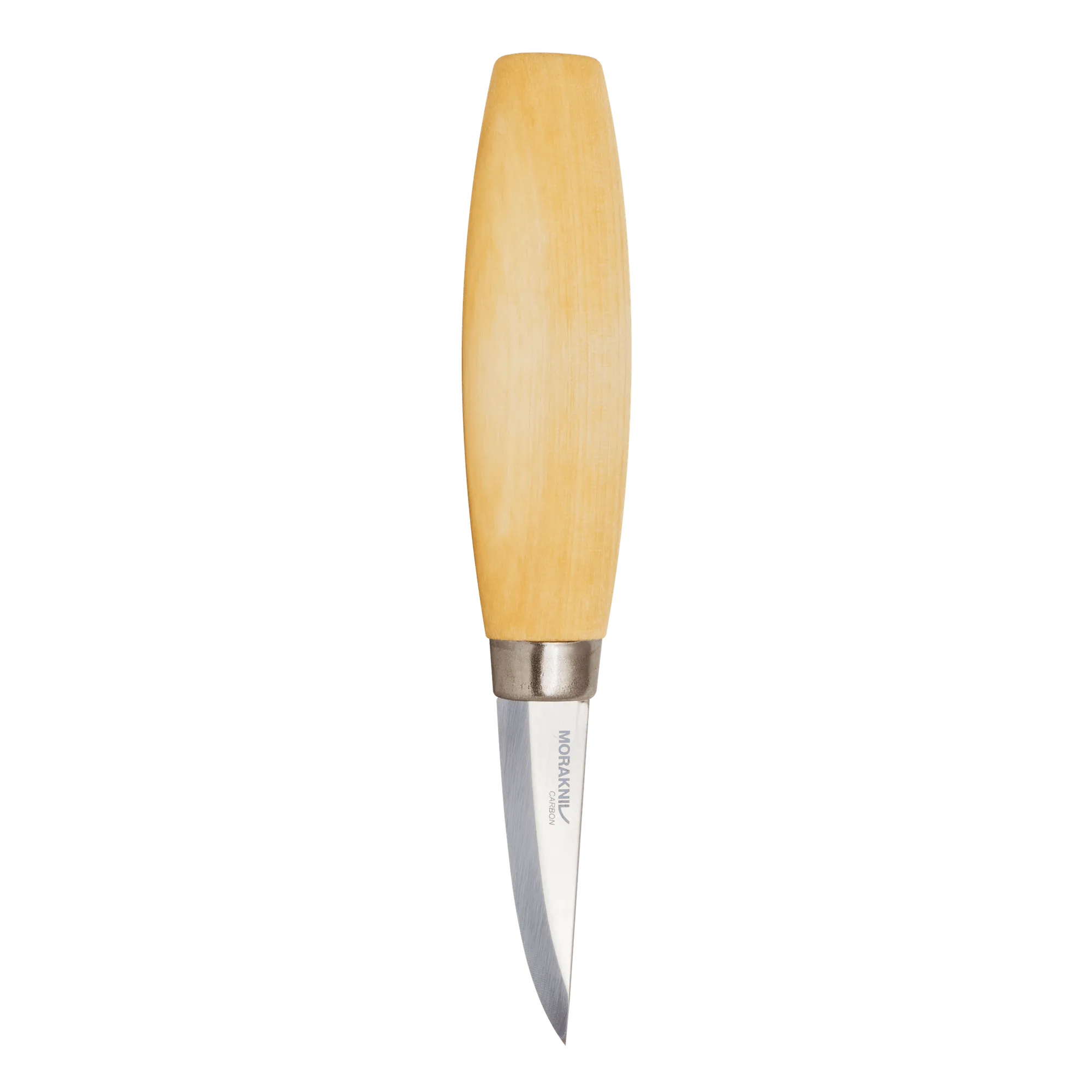
To start whittling, all you really need is a piece of wood and a good carving knife.Expand your carving toolkit
There are many types of carving knives designed for different tasks. Learn more about which model suits you in the guide “Find the Right Carving Knife.”Saw and sanding materials
A small saw is useful for cutting your wood pieces to the right size. Sandpaper or sanding blocks help smooth the surfaces and give your project a clean, finished look.Safety
As a beginner, it’s a good idea to wear protective gloves
Wood
Start with soft, easy-to-carve woods like birch, alder, linden, or aspen. Fresh (or “green”) wood is often easier to work with than dried wood, but dry wood holds its shape better.According to Sweden’s right of public access, you may only collect branches and twigs that have already fallen to the ground. Cutting wood from living trees requires permission from the landowner. You can also ask a forest owner if you may take from felled trees— or simply buy ready-to-use blanks online or in a craft or hobby store.

Whittling project ideas for beginners
To carve safely and achieve good results, there are a few basic techniques worth learning. Having a clear project in mind makes it easier - and more enjoyable - to get started. Here are some great ideas to try:- Dala Horse: Carve your own version of this timeless symbol of Swedish craft. Try our Wood Carving Starter Kit, which includes a carving knife, hook knife, and a pre-cut pine Dala horse.
- Butter knife: A classic and simple project that is also useful in everyday life.
- Spoon or ladle: A slightly more advanced project that teaches hollowing techniques using a hook knife.
- Wooden figures or animals: Small decorative carvings are great for practicing precision - and they make lovely gifts.
- Wall hooks or cabinet knobs: Fun to carve and practical for use in your entryway or kitchen.
- Feather sticks: Thin, dry wood shavings are ideal for practicing control and finishing short strokes.


Tips to improve as a whittler
Use the right tools. Choose the right knife for each project - see our guide on finding the best whittling knife.- Get to know the material. Work with soft, easy-to-carve woods like birch, alder, linden, and aspen. Fresh wood is easier to carve, while dry wood holds its shape longer.
- Practice regularly. The more often you carve, the better your technique will become.
- Experiment freely. Try chip carving, staining, or painting your figures to add personality.
- Stay inspired. Take a course, watch our tutorials on YouTube, follow carvers on social media, and check out our carving guides for more tips and ideas.
Basic Whittling Techniques
Working position
Sit with a stable work surface, feet flat on the ground, legs apart, and your forearms resting on your thighs.Carving away from your body
As a beginner, always carve away from your body. Hold the knife firmly and use small, controlled strokes. Experienced carvers may carve toward themselves with refined technique and control.Pulling the wood over a still knife
Keep the knife steady and pull the wood toward the edge to remove larger amounts of material quickly.Thumb push
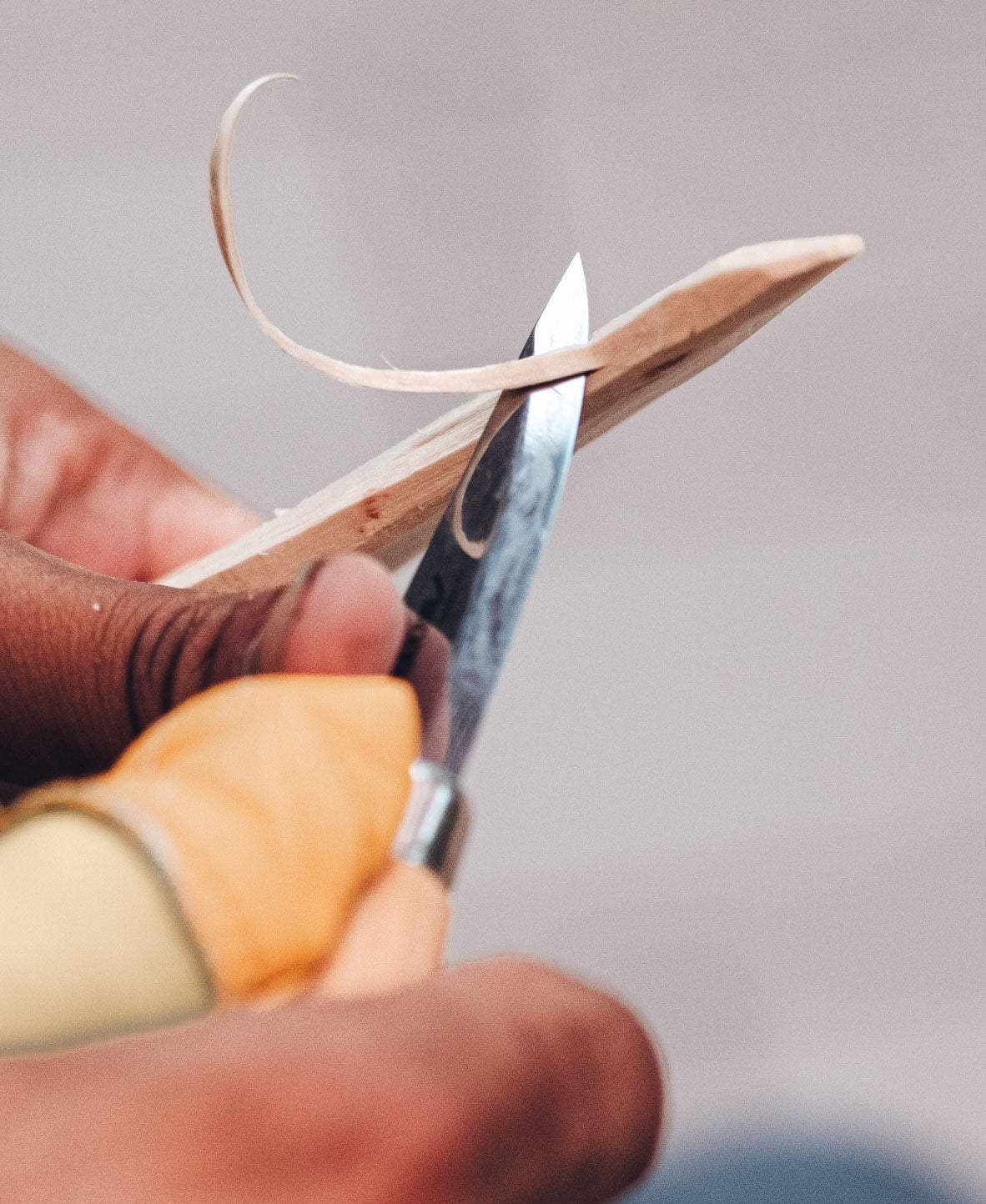
Use the thumb of your non-dominant hand to gently push the back of the blade while your knife hand guides the movement for short, precise cuts.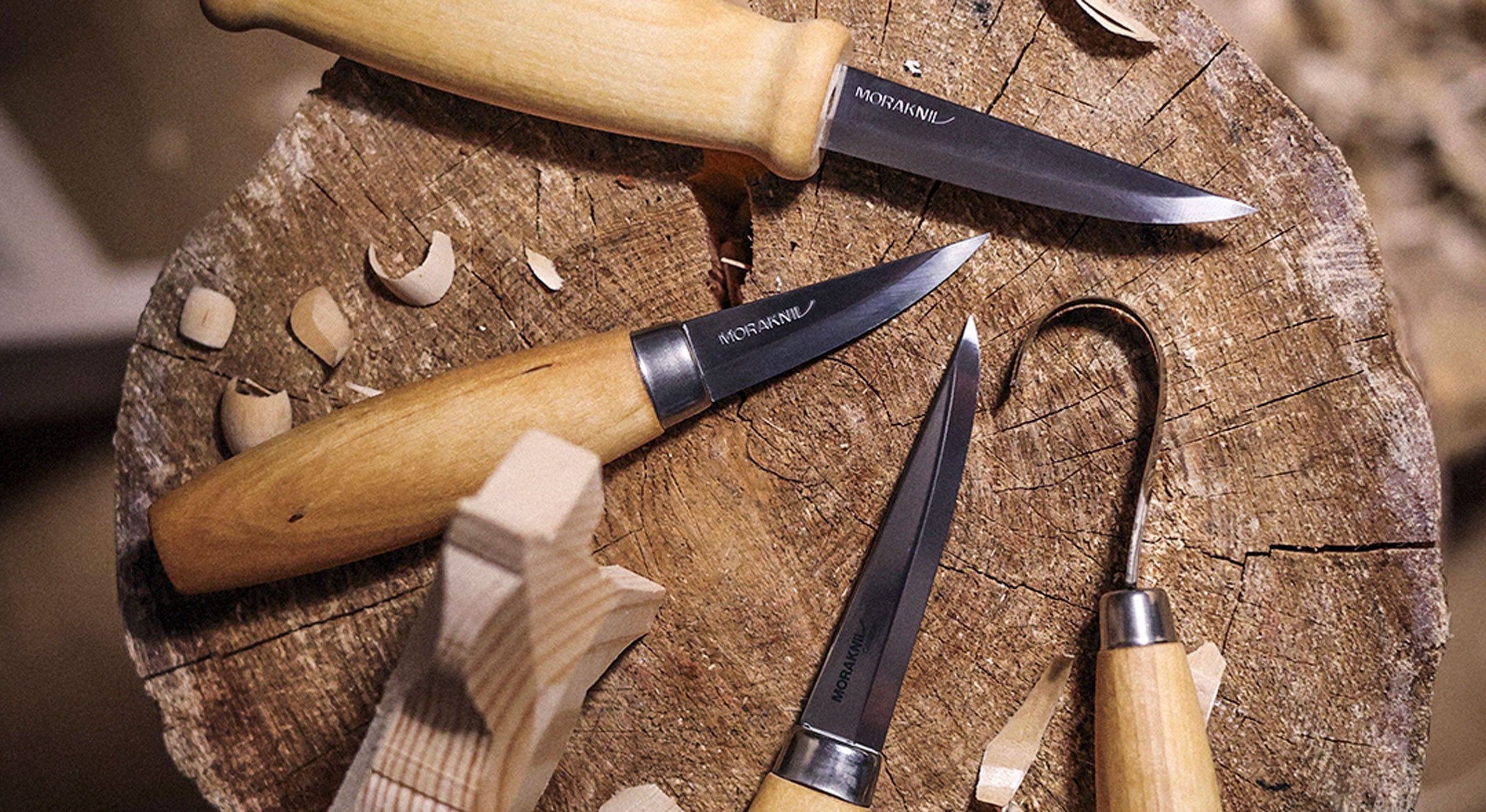
Rekommenderat innehåll
