KNIFE MATERIAL
Paring knife in stainless steel for fruit & vegetables
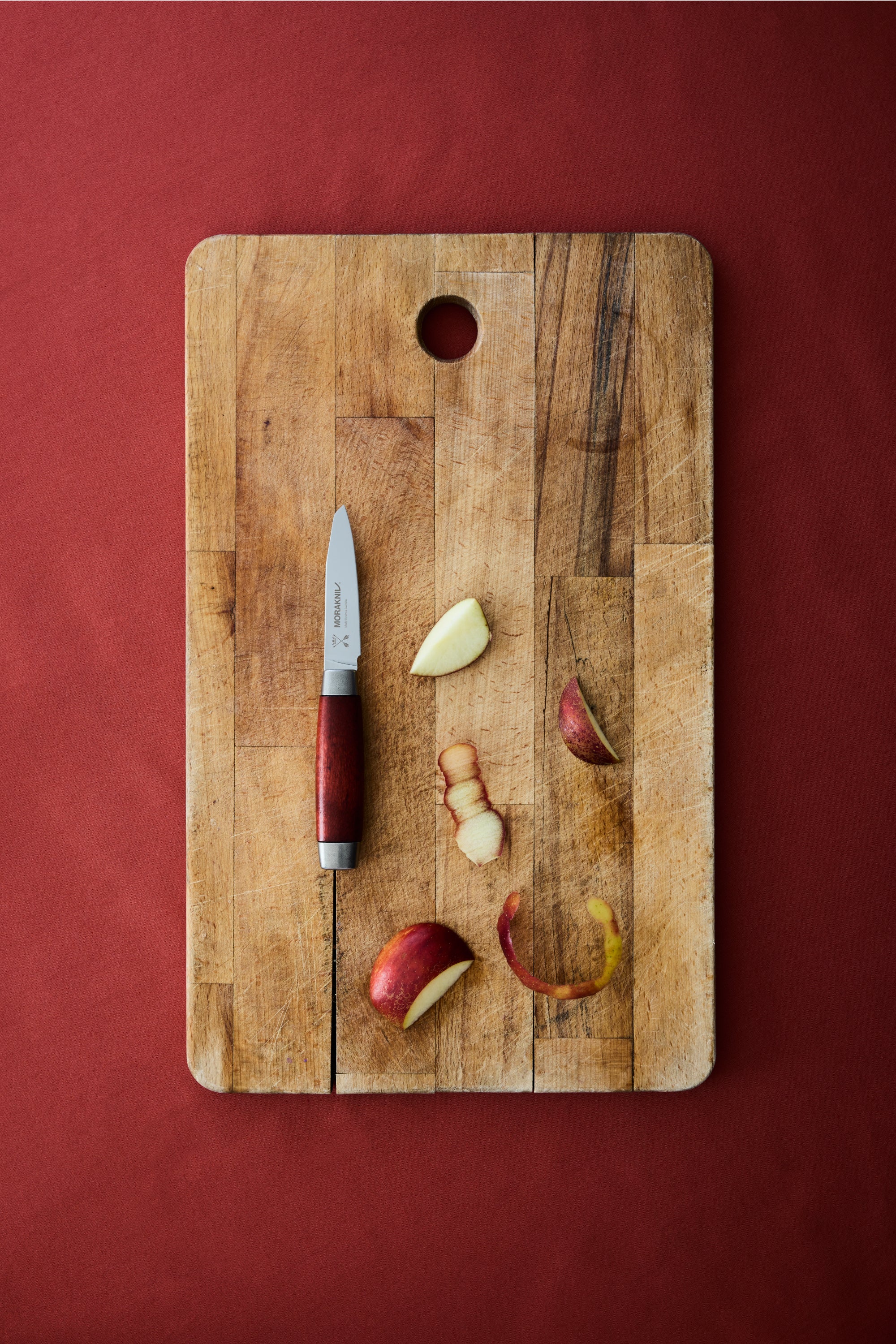
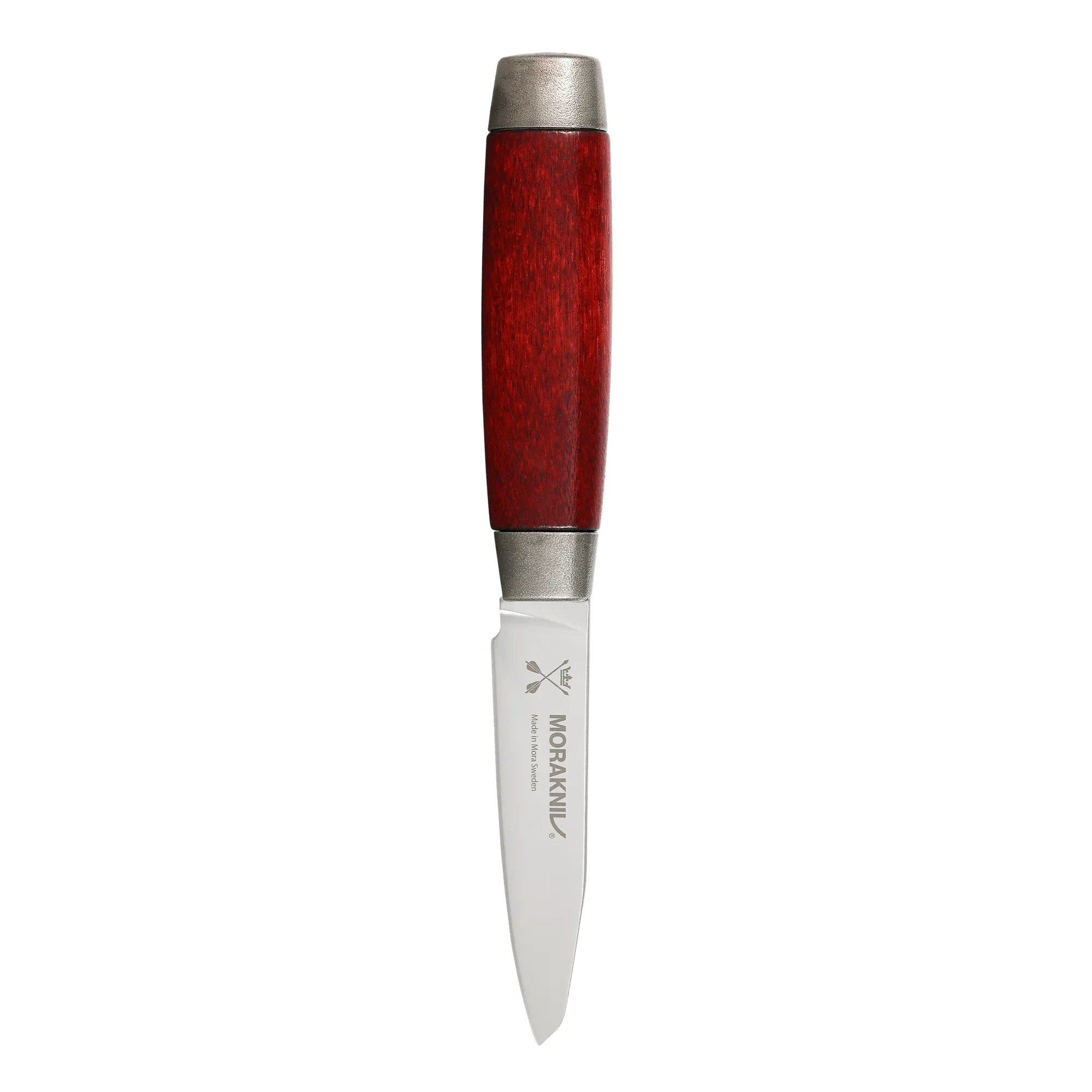
Paring Knife Classic 1891 (S) is the smallest tool in the kitchen, designed to handle small ingredients with great precision. The 8.6 cm stainless steel blade delivers clean cuts when slicing fruit and vegetables, while the red-stained birch handle sits securely and comfortably in the hand.
Paring Knife Classic 1891 (S) features a rustic design inspired by the first Morakniv, with a Swedish, red-stained birch handle shaped for a comfortable grip. The compact 8.6 cm blade offers excellent precision and is made from stainless steel with long-lasting sharpness.
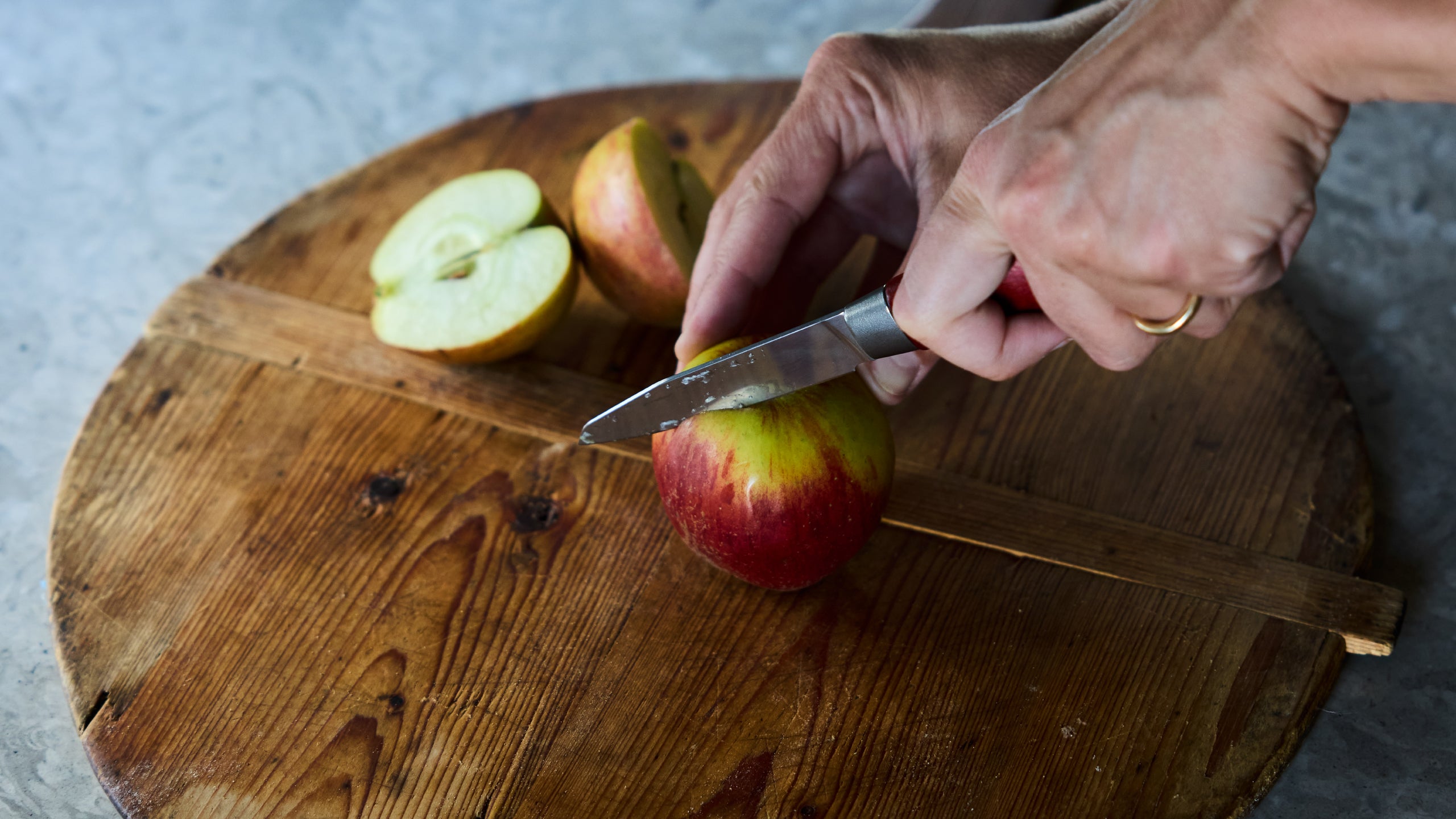
Thanks to its small size, the knife is ideal for peeling fruit and vegetables, coring, decorating or performing precise cuts with full control.
This well-balanced knife has a barrel-shaped handle that fits naturally in the hand, with an integrated finger guard for safe use. Stainless steel ferrules protect the wood from moisture and bacteria. The rounded spine and tip make it easy to scrape the board and help reduce the risk of injury.
The 86 mm long and 2 mm thick blade is made from Swedish stainless steel (10C28Mo2) with a recycling rate of over 80%. The steel is easy to maintain and offers excellent edge retention. With a hardness of 57 HRC and an 18° sharpening angle per side, the blade ensures clean, controlled cuts.
All components are made in Sweden, and the knife is hand-assembled at Morakniv’s factory in Mora – the result of 135 years of knife-making tradition.
Our products are intended for both hobby and professional use within cooking, outdoor activities, hunting, craft, woodcarving, and more. Please read this manual carefully before use. Improper use may lead to injury.
Lesen Sie mehr darüber, wie Sie Ihre Messer pflegen
KNIFE MATERIAL
Avoid dishwashers as detergent, heat and prolonged moisture can damage the blade, edge and handle. Sharp knives can also damage the interior of the dishwasher, and there is a risk of cutting yourself when loading or unloading it.
Never leave the knife in water or in a sink, as moisture can cause the wood to swell and crack. Rinse the blade in warm water after use, clean the handle with a damp cloth and mild soap if needed, and always dry the knife immediately.
The handle is lacquered and has a sealed surface that prevents oil from penetrating the wood. If you apply oil, it will remain on the surface and may become sticky or rancid over time.
The blades in Morakniv’s kitchen knives are made from stainless steel. A more accurate term is corrosion resistant steel – it resists rust better than carbon steel but can still develop spots or corrosion if left dirty or wet. Therefore, keep the blade clean and dry after use.
Store your knife on a magnetic knife strip or in a knife stand. Do not store it in a knife block, as these are difficult to clean inside and can collect bacteria. The edge may also wear against the wood when inserting or removing the knife, and moisture can become trapped in the slot if the knife is not completely dry.
When transferring chopped ingredients from the cutting board, turn the knife over and use the spine. Scraping with the edge can bend the very thin outer part of the edge and make the knife dull more quickly.
Use a honing steel to realign the edge between sharpenings and sharpen the knife when needed.